
Key Takeaways
- Long drives, flights, and hours in the kitchen keep your legs still, which lets blood pool in your leg veins and can leave them tired, swollen, or heavy.
- Getting up to walk around about once an hour on a long flight or road trip, and moving your calves in between, helps keep blood flowing.
- Hosting tips that help include taking short breaks, wearing supportive shoes, drinking water, and elevating your legs once the meal is done.
- Compression socks can help during travel, but ask your provider first, especially if you have severe swelling, reduced feeling in your legs, or circulation problems.
- If heaviness lingers after the holiday weekend, it may point to a vein problem. Vista Veins is a female-owned vein clinic with locations in Wexford, Butler, Monaca, and Erie, PA. Call the office at 412-440-500 to schedule an evaluation.
Why Does Sitting or Standing for Hours Strain Your Leg Veins?
Your leg muscles act like a pump. Each step squeezes the veins and pushes blood back up toward your heart. When you sit or stand still for hours, that pump slows down and blood can collect in your lower legs.
Long periods of sitting, like on a flight, cause your legs to retain more blood. That raises the risk of blood clots. Standing in place, such as at a busy kitchen counter, can be just as hard on your veins. The Cleveland Clinic lists sitting or standing for long periods as a risk factor for varicose veins.
Thanksgiving tends to combine both problems in one weekend. You may sit for hours getting there, then stand for hours cooking and hosting.
How Can You Keep Your Legs Moving During Thanksgiving Travel?
Movement is the simplest fix. The Cleveland Clinic notes that not moving for more than four hours during travel can contribute to deep vein thrombosis (DVT), a blood clot in a deep vein, usually in the leg. Helpful travel habits include:
- Get up and walk the aisle about once an hour on a long flight.
- Stop the car about once an hour on a long road trip and walk around for a few minutes.
- Exercise your calf muscles if you need to stay seated, such as raising and lowering your heels and toes.
- Drink enough fluids, especially while traveling.
Leg Swelling After a Flight
When blood pools in your legs, they can feel tired, heavy, or achy. Walking the aisle, flexing your calves, and elevating your feet once you arrive can help. Compression socks may also help, which is covered below.
Pay attention to the pattern. Swelling that worsens with heat or long stretches on your feet and gets better when you raise your legs is often vein-related, according to the Vista Veins leg swelling page. Swelling that keeps coming back is worth a conversation.
What Tired Legs Remedies Work for a Busy Holiday?
Hosting means long stretches on your feet. These tired legs remedies fit into a holiday schedule:
- Take regular breaks. Take breaks to stretch and walk around so blood flows better in your legs.
- Change position. Shift your weight, sit for a few minutes while you prep, or switch tasks.
- Wear supportive shoes. Comfortable footwear can reduce strain on your feet and legs during long kitchen shifts.
- Elevate your legs. Lift your legs above your heart several times a day. Gravity helps push blood back toward your heart.
- Stay hydrated. Keep a water bottle nearby while you cook and host.
- Stay active. A short walk after the meal helps blood flow.
What Are the Basics of Compression Socks for Travel?
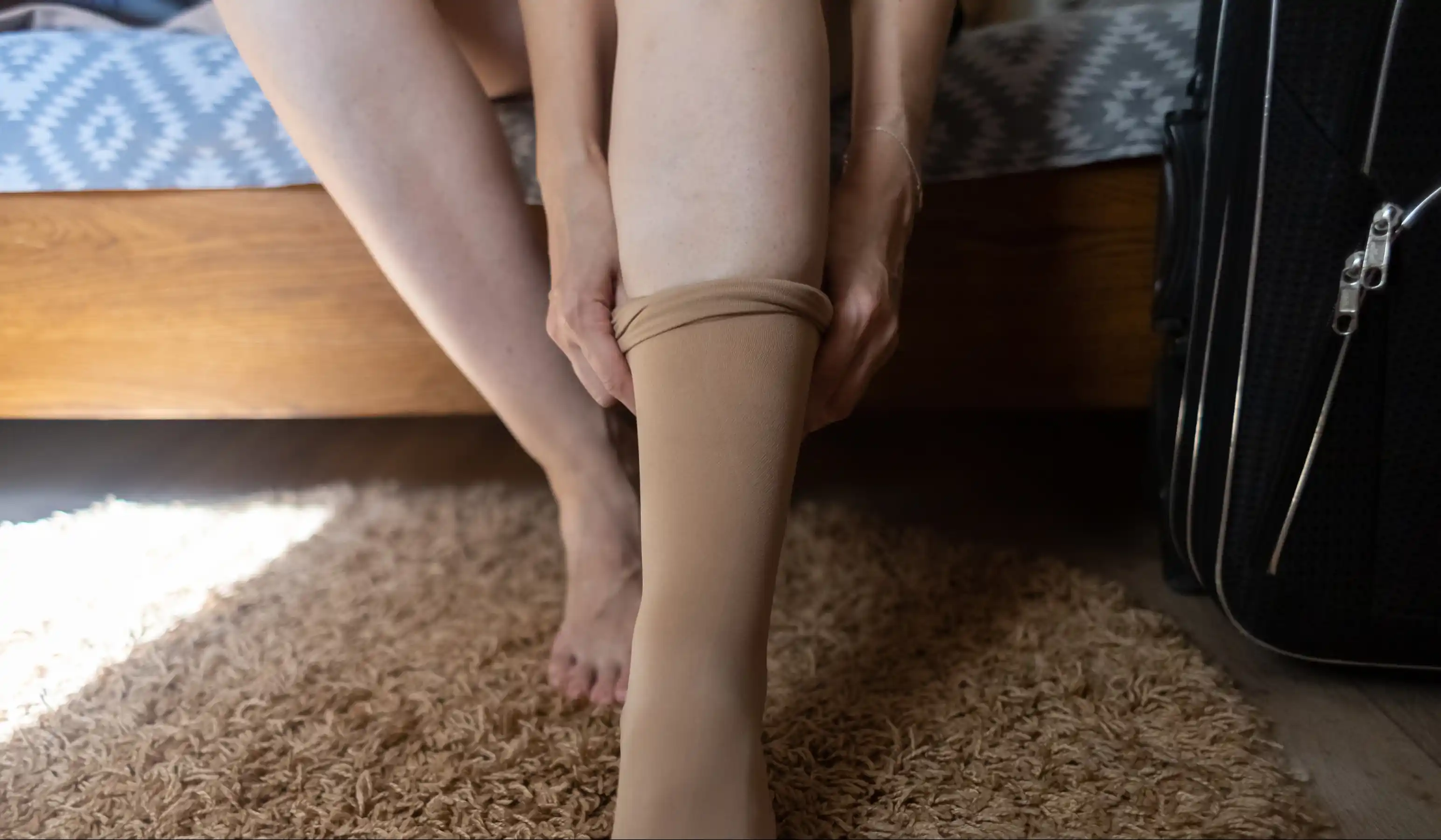
Compression socks gently squeeze your legs to help prevent blood from pooling. They are safe for most people, and they can be helpful when you sit for long periods, such as on a long flight. Compression socks may help your muscles recover if you are on your feet all day.
A few basics:
- Put them on in the morning, before your legs start to swell.
- Take them off before bed, and do not sleep in them.
- Get measured for the right size instead of grabbing a random pair.
- Remove them and call your provider if you notice pain, numbness, tingling, skin discoloration, or worsening swelling.
Always ask your provider before wearing them if you have severe swelling, reduced feeling in your legs, or circulation problems. Do not wear them if you have open wounds or an active skin infection.
| Compression Level | Pressure (mmHg) | What to Know |
|---|---|---|
| Mild | 8 to 15 | The lightest squeeze of the four levels |
| Moderate | 15 to 20 | A little firmer than mild |
| Firm | 20 to 30 | Stronger support; ask your provider if it is right for you |
| Extra-firm | 30 to 40 | Medical-grade; usually available by prescription and used under a doctor's supervision |
Pressure is measured in millimeters of mercury (mmHg). Your physician can suggest a specific pressure level if you are wearing compression for a medical concern.
When Do Heavy, Swollen Legs Point to a Vein Problem?
A heavy day after a big holiday is normal. Heaviness that keeps returning is not something to ignore. Consider a vein evaluation if you notice:
- Heavy or aching legs that come back most days, even after rest.
- Swelling that builds through the day and keeps returning.
- New or growing varicose veins.
- Skin changes near the ankles.
These can be signs of chronic venous insufficiency, a long-term condition in which damaged leg veins struggle to send blood back to the heart. If you are not sure whether your symptoms are vein-related, the vein symptom quiz can point you toward relevant information and next steps.
One warning sign needs faster action. Sudden swelling in one leg, with pain, tenderness, warmth, or red skin, can signal a blood clot. Call your provider right away or go to the emergency room, and not to wait to see if it goes away. Chest pain, shortness of breath, or coughing up blood are also reasons to get emergency care.
Enjoy the Holiday Now, and Get Answers if Heaviness Stays
A few habits can make a big difference over a travel and hosting weekend: keep moving, take breaks, elevate your legs, stay hydrated, and ask your provider about compression socks. If heavy legs hang around after the leftovers are gone, a vein evaluation can show whether a treatable problem is behind them.
Vista Veins is a woman-owned practice founded by Dr. Kathleen Latouf, with locations in Wexford, Butler, Monaca, and Erie, PA. Request an appointment for a vein evaluation, and learn more about treating varicose veins and leg swelling.
Frequently Asked Questions
Do compression socks help with long flights or road trips?
They can. Sitting for long periods lets your legs retain more blood, and compression helps reduce swelling and pooling. Ask your provider first so you get the right level and fit.
How can I reduce leg swelling after a flight?
Walk, flex your calves, elevate your legs above your heart, and drink water. Compression socks may help if your provider approves. Swelling that is sudden, one-sided, painful, or warm needs urgent care.
What are the best tired legs remedies during the holidays?
Take movement breaks, elevate your legs, wear supportive shoes, stay hydrated, and ask about compression socks. Heaviness that keeps returning after the holiday is worth a vein evaluation.
How do I find a vein doctor near me if heavy legs keep coming back?
Look for a physician-led vein clinic that checks how blood flows through your leg veins. Vista Veins offers evaluations in Wexford, Butler, Monaca, and Erie, PA, and you can reach the team at (412) 440-5000.
Is there a vein clinic near me that can tell if my swelling is vein-related?
Yes. Vista Veins evaluates leg swelling by reviewing your symptoms and history and performing an ultrasound when indicated, so you can learn what is driving it.
