
Radiofrequency Ablation for Leg Veins at Vista Veins
Treat the Source, Not Just the Surface
For many people, varicose veins aren't just a cosmetic issue. The aching, heaviness, and swelling that come with venous disease can affect how you move, how you sleep, and how you feel by the end of a long day. Radiofrequency ablation (RFA) treats the problem at its source. A small catheter delivers controlled heat inside the affected vein, sealing it closed so blood reroutes through healthier vessels. There's no surgery, no general anesthesia, and patients walk out of their appointment the same day they walk in.
At Vista Veins, Dr. Kathleen Latouf performs RFA treatment as part of a physician-led approach to vein care. She built her clinical career directing emergency departments and overseeing quality across large health systems, so she knows how to assess a complex case and focus on what actually works for the individual patient in front of her. She's also made fast access a priority—while local vein clinics are booking vein appointments months out, Vista Veins patients are seen in weeks.
To find out whether radiofrequency ablation for varicose veins is right for your situation, request an appointment today.
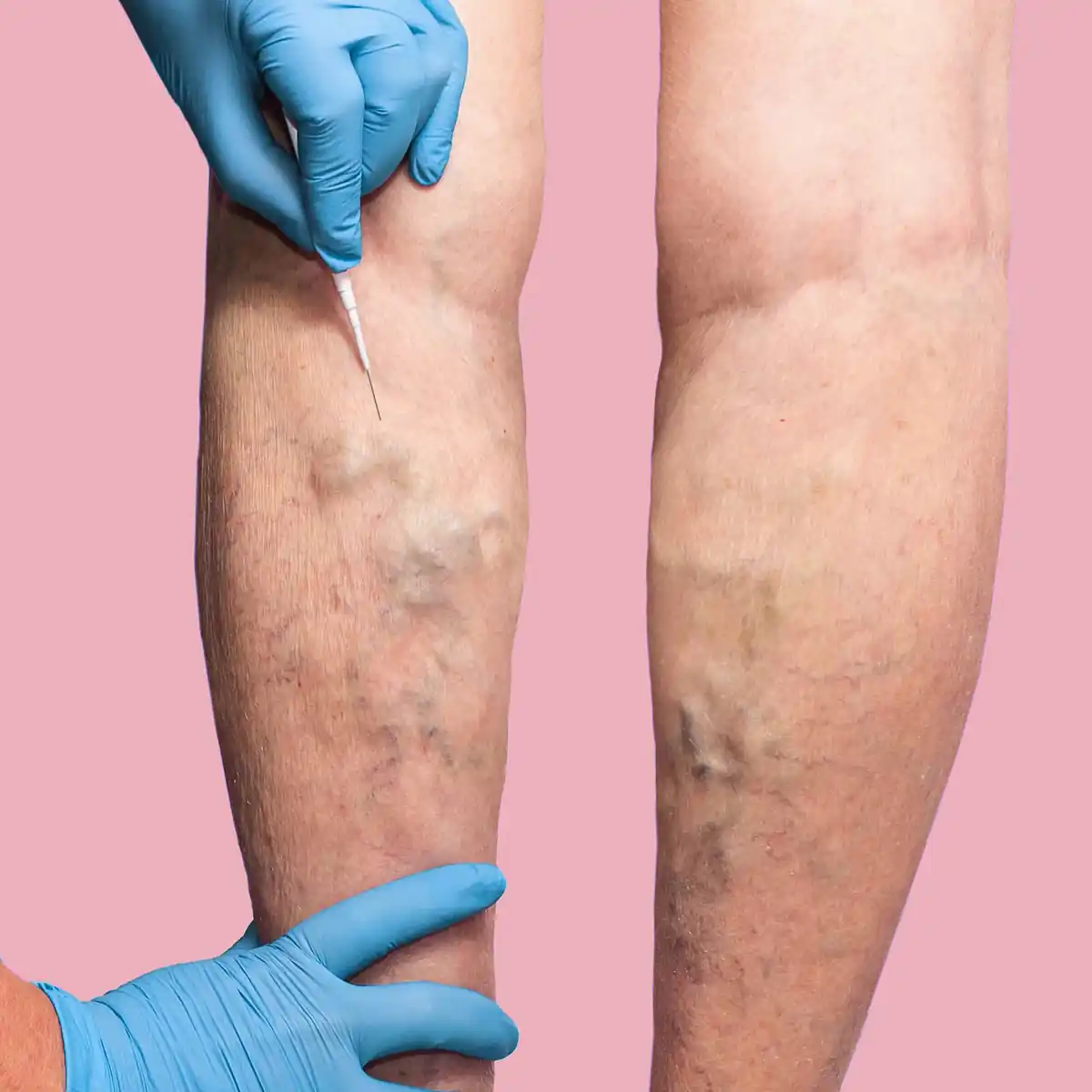
What the Radiofrequency Ablation Procedure Involves
Understanding RFA Treatment for Varicose Veins
Radiofrequency ablation for leg veins treats the root cause of varicose veins, not just the surface appearance. Most varicose veins develop because of venous reflux, a condition in which damaged valves allow blood to pool in the legs instead of circulating upward. RFA uses controlled radiofrequency energy to heat and seal the vein wall from the inside. The vein is then gradually absorbed by the body, and blood naturally reroutes through surrounding vessels. Most patients notice real improvement in symptoms and appearance within a few weeks of treatment.
How the Radiofrequency Ablation Procedure Works
The procedure starts with an ultrasound to map the affected veins and guide catheter placement. A small catheter is inserted through a tiny access point, typically near the knee. Local anesthetic is applied along the length of the vein, and radiofrequency energy is delivered through the catheter as it's slowly withdrawn. The whole thing takes less than an hour and is performed in-office without general anesthesia.
Recovery and Results
Recovery is one of the reasons many patients choose RFA over surgical options. Most people walk out of their appointment and are back to normal daily activity within a day or two. Some bruising, tightness, or tenderness along the treated vein is expected and usually clears up within a few weeks. Wearing compression stockings during recovery supports circulation and helps achieve the best possible result.
Is Radiofrequency Ablation Right for You?
RFA works best for patients with venous reflux confirmed by ultrasound, particularly when the great saphenous vein is involved. Your provider will review your health history and imaging before recommending this or any other treatment. If you have questions about what might affect your eligibility, that's exactly what a consultation is for.
If you're dealing with leg pain, swelling, or visible varicose veins, take our quiz to learn more about your options.
Frequently Asked Questions
What is radiofrequency ablation for varicose veins?
Radiofrequency ablation for varicose veins is a minimally invasive, in-office procedure that uses thermal energy to close off diseased veins from the inside. A small catheter is guided into the affected vein under ultrasound imaging, and radiofrequency energy heats and seals the vein wall. The treated vein is then gradually absorbed by the body, improving both symptoms and appearance over the following weeks.
Is radiofrequency ablation a painful procedure?
Most patients are surprised by how comfortable RFA is. Local anesthetic is applied along the length of the vein before treatment begins, so discomfort during the procedure is minimal. Afterward, some tenderness or tightness along the treated vein is normal and typically resolves within a few weeks.
How many RFA treatment sessions will I need?
Many patients achieve their desired results in a single RFA session. More complex cases involving multiple veins or significant reflux may benefit from additional treatment. Your provider will give you a realistic picture of what to expect during your consultation, based on your specific anatomy and the findings from your ultrasound evaluation.
What does recovery look like after an RFA treatment?
Recovery after RFA is usually quick. Most patients walk out of their appointment and return to normal daily activities within a day or two. Some temporary bruising, tightness, or mild discomfort along the treated vein is common and tends to resolve on its own within a few weeks. Your provider will give you specific aftercare instructions, including guidance on activity and compression stocking use.
How do I schedule radiofrequency ablation near me?
Scheduling at Vista Veins is simple. You can request an appointment online or call our office, and we'll get you on the calendar promptly. Our team is committed to fast access because vein discomfort affects your quality of life every day. We look forward to seeing you soon.