
Answers for Itchy Legs and Skin Changes Near You
Get to the Source of Your Itchy Legs and Skin Changes
You've tried new lotions, switched laundry detergents, and maybe even moved to a different soap. Still, the itchy legs keep coming back, and now the skin around your ankles looks darker or feels different. When itching and skin changes on legs show up together, it's worth looking beneath the surface. Weak circulation in the leg veins can irritate the skin above them, leading to itching, a reddish-brown tint, and skin that looks or feels thicker than it used to. These changes build slowly, so many people don't connect them to their veins until the signs are hard to ignore.
At Vista Veins, we're a physician-owned vein clinic, and we start by looking for the cause. Dr. Latouf or one of our experienced surgeons will examine the affected skin, ask about your symptoms, and use ultrasound to check how blood flows through your leg veins. If a vein problem is driving your skin symptoms, we offer minimally invasive treatments, and we see new patients in weeks, not months.
Request an appointment today to find out what's behind your skin symptoms.
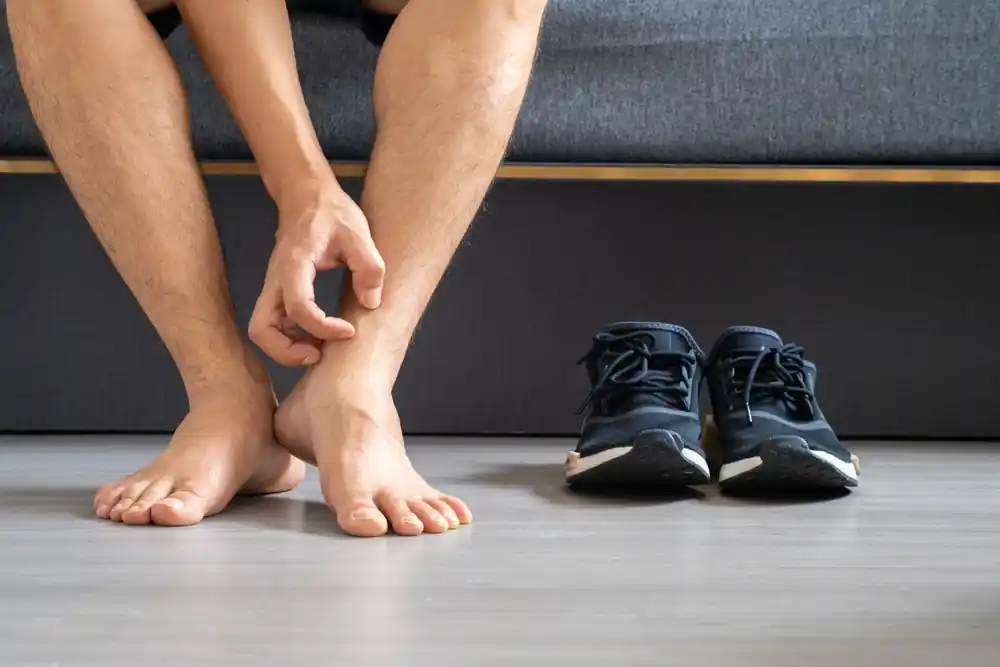
Leg Skin Discoloration: What Your Veins May Be Telling You
How Vein Problems Cause Itching and Skin Changes
Why Poor Vein Circulation Affects Your Skin
When vein valves fail, blood pools in the lower legs and pressure builds inside the veins. Over time, that pressure pushes fluid and red blood cells out of tiny vessels and into the skin around them. The skin reacts in a few ways:
- Iron from the leaked blood cells leaves a rusty stain, which is why people notice brown discoloration on lower legs and discolored skin on ankles
- The extra fluid and inflammation cause itching
- The skin may turn red, dry, or flaky
Doctors call this pattern venous stasis dermatitis, meaning irritated skin caused by blood pooling in the veins. It's one sign of chronic venous insufficiency (CVI), a long-term condition in which damaged vein valves let blood collect in the legs.
Skin Changes to Watch For
These signs often point to a vein problem when they appear together or keep coming back:
- Itching over a vein, or a crawling feeling in the leg that's often worse at night
- A brown, red, or purple tint near the ankles and lower legs
- Dry, scaly skin that doesn't improve with moisturizer
- Skin that feels tight, thick, or hard, which can signal long-term pressure damage
- Leg swelling around the ankles, especially by evening
- Spider veins or bulging varicose veins nearby
Why Early Evaluation of Skin Changes Matters
Skin changes caused by vein disease rarely clear up on their own, and they can progress. Constant scratching can break the skin, and fragile skin over a high-pressure vein can open into a sore that is slow to heal. Catching the problem earlier gives you more options.
Other skin problems can look similar, which is why an exam is the most reliable way to tell what you're dealing with:
- Eczema, a common condition that causes dry, itchy patches
- Allergic skin reactions
- Simple dry skin
Treatment for Vein-Related Skin Changes
Moisturizers and creams can soothe irritated skin, but they don't fix the vein problem underneath. To treat the cause, we offer:
- Radiofrequency ablation: closes a damaged vein using controlled heat
- Varithena: closes the vein with a medical foam
- Sclerotherapy: closes smaller veins with an injection
With each option, blood can flow through healthier veins afterward. Compression stockings (snug socks that gently squeeze the legs) are also often recommended to reduce pressure in the legs. Your provider will explain which approach fits your veins and your symptoms.
Not sure whether your skin changes are vein-related? Our vein symptom quiz is a quick place to start.
Frequently Asked Questions
Can vein problems cause itchy legs?
Yes. When blood pools in the leg veins, it irritates the skin above them, and that irritation can cause itchy legs along with dryness, redness, or a darker tint near the ankles. Itching that keeps returning, especially near visible veins or swollen ankles, is worth getting checked, since lotions alone won't fix a vein problem.
What causes brown discoloration on the lower legs?
Brown or rust-colored patches on the lower legs often appear when high pressure in the veins pushes red blood cells into the surrounding skin. The cells break down and leave an iron-rich stain behind. This is a common sign of chronic venous insufficiency, and it often appears alongside venous stasis dermatitis. Other conditions can cause similar patches, so Dr. Latouf or one of our experienced surgeons will examine your legs and confirm the cause with ultrasound.
Does insurance cover treatment for skin changes on legs caused by veins?
Vista Veins accepts most major insurance plans, and treatment for vein disease that causes skin changes on legs is often covered when it's medically necessary. Insurers usually look for documented symptoms and an ultrasound that confirms reflux (blood flowing backward in the vein) before approving a procedure. If you'd prefer to skip the approval process, we also offer self-pay options.
How do I find a vein doctor near me for itchy legs?
Scheduling at Vista Veins is easy, and we offer online scheduling. Request your consultation online or call our office, and we'll get you on the calendar in weeks, not months. Take the first step toward calmer, healthier skin. We look forward to seeing you!